
Crystal cutting and polishing techniques

If you have read our article on the differences between glass and crystal, you may be interested in the cutting and polishing techniques used to create as many facets as possible while preserving delicate workmanship, clean cuts and the beauty of crystal.
Before exploring these techniques, we need to distinguish crystal products shaped by different methods. Based on the products TTD has worked with, we divide them into two groups:
- Industrially produced crystal is cast in moulds to a predetermined shape. It is generally less valuable and can be recognised by uniformly sized pieces and less sharply defined edges. Industrial production keeps its value relatively low.
- Handcrafted crystal is heated, blown and shaped using traditional methods and techniques, similar to glassblowing but at higher temperatures and with greater complexity. It is commonly used in artistic and decorative pieces.
When are crystal cutting and polishing techniques used?
First, cutting and polishing create decorative patterns on surfaces, enhancing the appearance of vases, glasses, cups and crystal elements in products such as chandeliers.
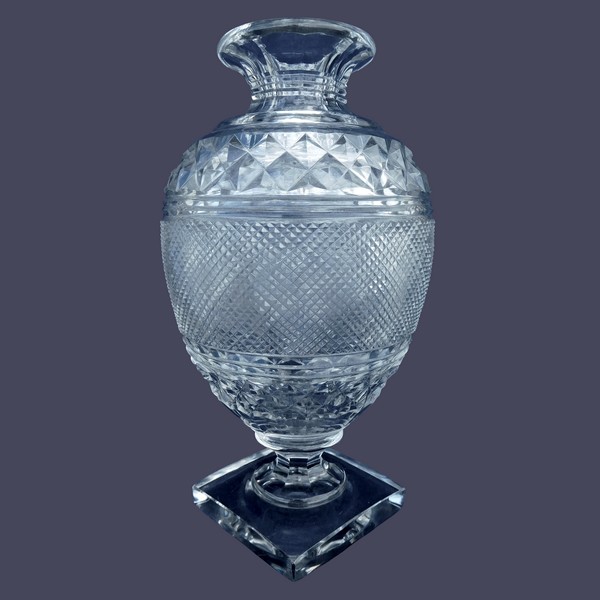
For example, the hand-cut diamond patterns are a distinctive feature of Baccarat crystal from France.
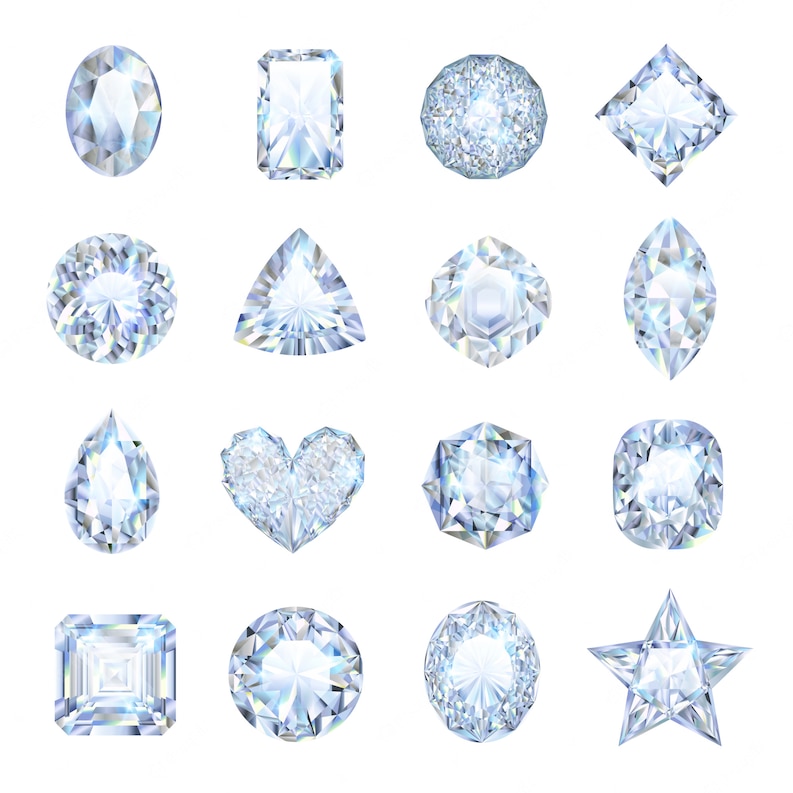
Cutting and polishing also finish the surfaces of crystal components in shapes such as octagons, balls, prisms, drops, rounds, ovals and almonds.
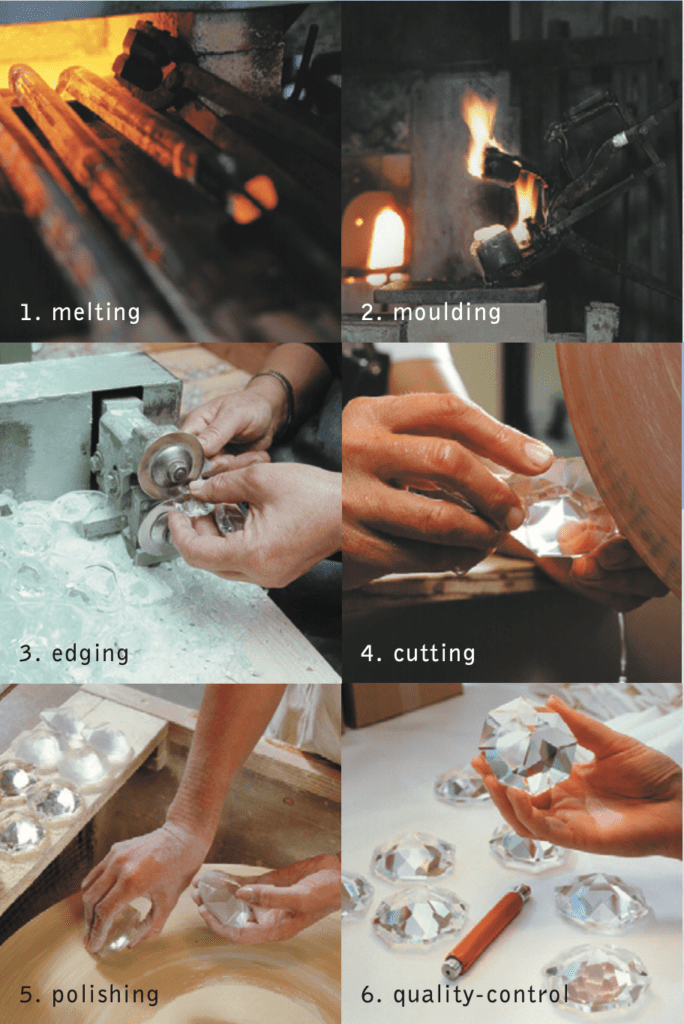
- The main raw material is high-quality crystal glass with excellent transparency and light refraction. Handcrafting is a lengthy, labour-intensive process.
- Crystal glass is heated in a furnace until the clear or coloured material melts, then pressed into metal moulds under high pressure.
- This produces a blank in the shape of the final piece, which is then left to cool and harden.
- The piece is hand-cut by a master craftsperson. Through several stages, the facets and edges are cut until incoming light separates into its spectral colours. Final polishing adds brilliance.
- Machine production uses high-precision cutting machines. The finished crystal can then receive a metal oxide coating in a vacuum to create coloured finishes.
#Source: Schöler
The process above describes how a crystal component commonly found in Schöler products is made.
Manufacturers use different names for their products. Renowned brands producing hand-cut and polished crystal components include Swarovski (Austria), Preciosa (Czech Republic) and Schöler (Austria).
The production process, quality of the raw materials and skill of the craftspeople are therefore decisive factors in the quality and value of crystal.
