
How to tell crystal and glass apart

Crystal and glass have different properties and structures. The following characteristics can help distinguish them:
- Crystal structure
- Transparency
- Strength and hardness
- Weight
- Melting point
- Examining the structure
- Interaction with light
- Checking uniformity and transparency
Crystal and ordinary glass can often be distinguished by their different characteristics. Crystal is described here as having a special structure, defined facets, cut angles and distinctive texture, whereas ordinary glass has an irregular structure and no characteristic form. Crystal is also denser and therefore feels heavier in the hand.
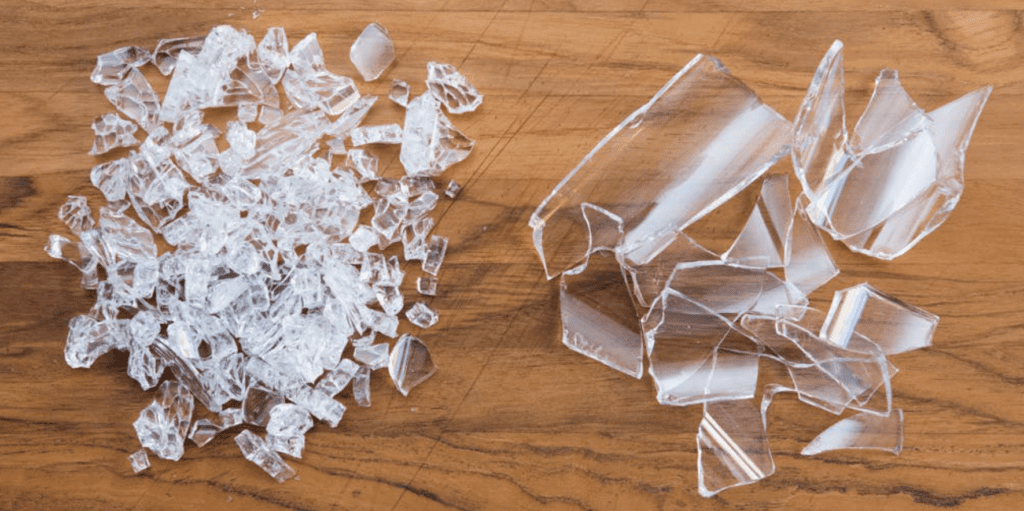
Differences in the structure of crystal and glass can become apparent if a piece is accidentally broken.
Glass shards have sharp edges, while crystal is described as breaking differently: glass generally fractures according to the applied force, whereas crystal follows its own structure.
Crystal generally has greater transparency than ordinary glass, transmits and interacts with light more effectively, and creates attractive lighting effects. Ordinary glass may be opaque or only partly transparent and may not produce the same effects.
Crystal also requires a higher melting temperature because, in addition to its main silicate component, it contains compounds of certain metals, such as lead oxide.
These characteristics can help distinguish crystal from glass. However, some types of glass have similar characteristics and are called crystal glass, making the distinction more difficult.
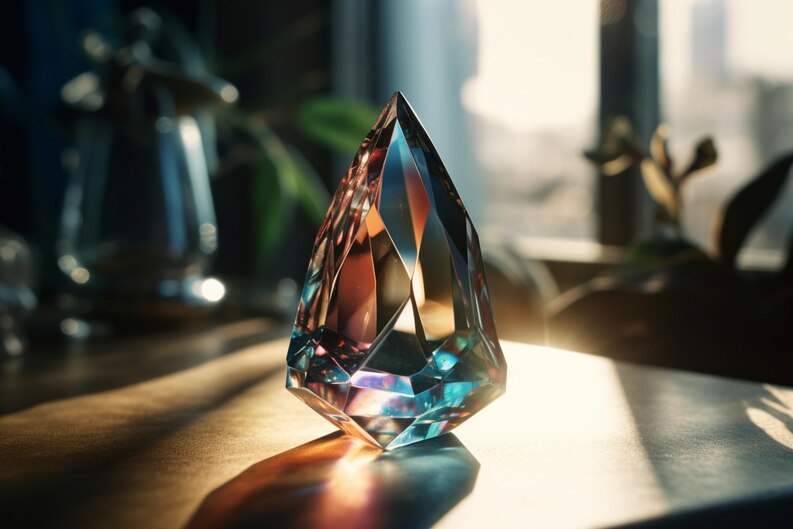
Distinguishing crystal glass from crystal can be challenging because both share the same basic ingredients. The difference lies in the proportions of the materials used during production. Depending on a workshop’s experience, skill and precision, the resulting product may be exceptional crystal or comparable to high-quality glass.
The following characteristics may also help distinguish the materials, although not every consumer has access to the equipment needed to test them.
Examining the structure: crystal glass may have characteristics similar to crystal but is often described as less perfect. Close inspection may reveal inconsistencies in its structure.
Evaluating its interaction with light: place the material over a drawing or text and view it from different angles. Crystal produces attractive optical effects by separating white light into its component colours, while crystal glass may not produce the same effect. Crystal cutting is a complex technique designed to make the most of this optical property.
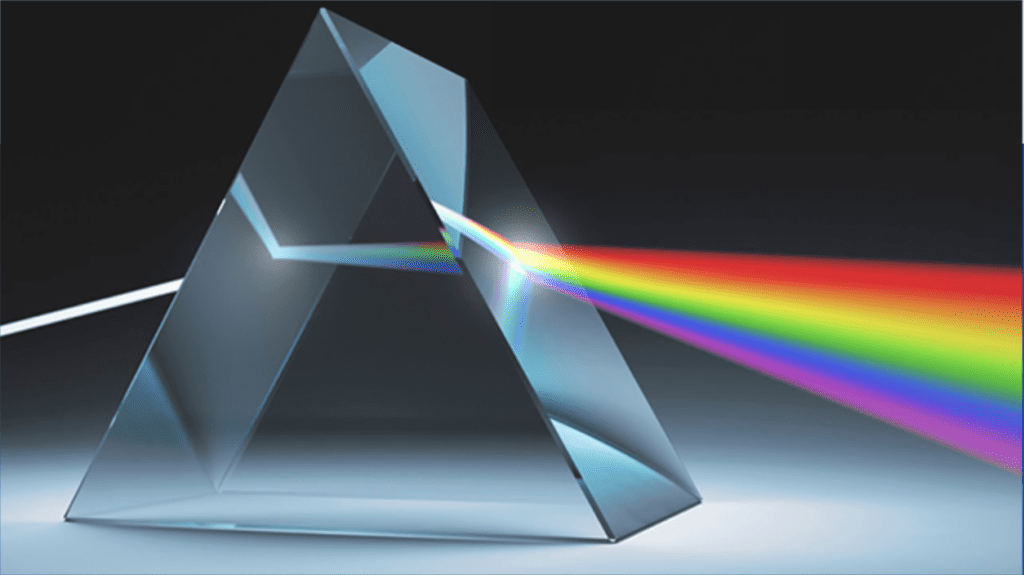
This can occur because ordinary glass has a refractive index ofn= 1.5, while adding lead can increase it to around 1.7 or 1.8. A higher refractive index also correlates with greater dispersion, which measures how a material separates light into its component spectrum, as in a prism. Crystal cutting uses these properties to produce a brilliant sparkle as each facet reflects and transmits light through the object.
*n denotes the refractive index)
#SOURCE: Wikipedia
Checking uniformity and transparency: examine the material closely for consistency and clarity. Crystal glass may show irregularities, marks or cloudiness on its surface, whereas fine crystal is generally highly transparent and free from such marks or haze.
Microscopic examination: if a microscope is available, the sample can be inspected under its light. The source describes crystal as showing clearly defined angles, forms and planes, while crystal glass may not display these characteristics as clearly.
If you cannot clearly verify the differences between two products, choose a recognised brand with a clearly documented origin. A reputable supplier is another important consideration when seeking a quality product that is suitable for its intended use and offers value for money.
